Conversation Topic
AI Visibility Scan
Practical questions about ai visibility scan, including how to explain it, what to avoid promising, and how it connects to AI visibility and business control.
Useful questions, comparisons, examples and next-step checks around AI Visibility Scan.
Questions & Answers
Answers About AI Visibility Scan
These answers organise the topic into practical checks, comparisons and useful research notes.
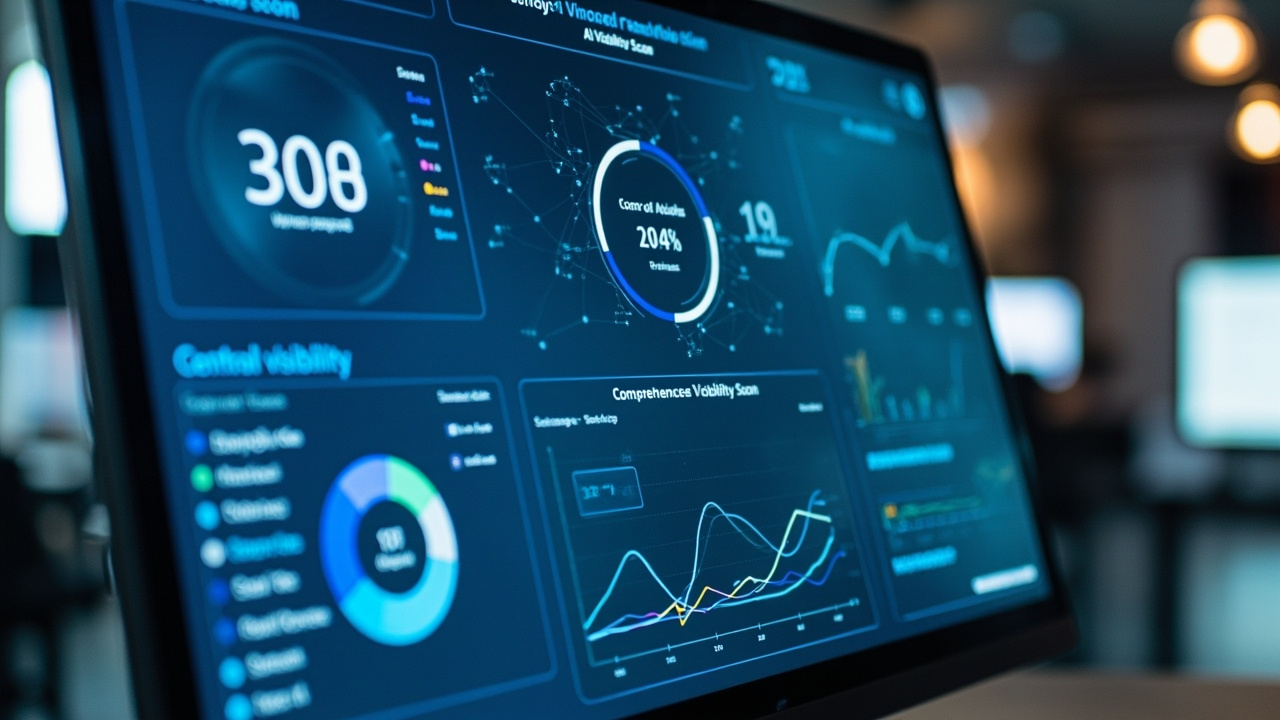
You want a dashboard that shows progress without promising sales. Use a lightweight view that ties AI visibility changes to your approved facts, Q&A and images. Keep it grounded in concrete measures rather than guesses. Focus on three things: (1) core questions coverage — how many key questions are now supported by approved facts; (2) retrieval activity linked to those facts; and (3) updates to Q&A, images or structured outputs. Include a clear baseline an…
2026-09-23 What concrete steps should I take to turn AI visibility signals into knowledge actions for a client?Signals like discovery, retrieval, and referrals are evidence of AI activity, not guarantees of revenue. To move from signals to knowledge for a client, start by documenting a baseline of what has been observed and which approved facts it touches. Then build a simple, repeatable plan: 1) define a baseline set of signals (discovery, retrieval, referrals) and map them to the exact facts, Q&A, images, and structured information that exist today; 2) measure co…
2026-09-22 How can I present those evidence parts to clients without overclaiming results?Explain that evidence parts show current readiness and gaps, not guaranteed outcomes. Describe discovery, retrieval, and referral signals as indicators of what the site can support today, and clearly say they don't guarantee AI citations or rankings. Use plain language and connect each gap to a concrete action you can take, like updating a fact, adding a FAQs, or improving an image cue. A short walkthrough can then lay out the plan to close those gaps, wit…
 32 Q&A
Commission Or Client Discount Options
32 Q&A
Commission Or Client Discount Options
 73 Q&A
Partner Walkthrough
73 Q&A
Partner Walkthrough
 35 Q&A
Digital Twin Vs Website
35 Q&A
Digital Twin Vs Website
 34 Q&A
Digital Twin Vs Chatbot
34 Q&A
Digital Twin Vs Chatbot
 59 Q&A
AI-Readable Business Knowledge
59 Q&A
AI-Readable Business Knowledge
Start with the baseline signals you can observe consistently: discovery events over time; first-party retrievals aligned to approved facts; the proportion of questions resolved using approved knowledge; confirmed AI referrals or browser arrivals; and outputs that include visible citations. These form the defensible core you can show a client. Then plan progressive metrics that reveal deeper knowledge and usefulness, not guarantees. Track changes over time,…
2026-09-16 What evidence should we show the client to prove the fixes helped?Provide a brief, client-ready summary of what changed: which core pages (services, locations) were fixed, what Q&A were added or tightened, and where visual examples was improved. Keep it factual and concrete. Show the observable signals before and after the fixes: discovery counts, retrievals with approved facts, any citations, and coverage of the top customer questions. Remember these signals are evidence of progress, not a promise of sales. Close with t…
2026-09-12 Which exact metrics should I display first on the dashboard to build trust?Start with a small, evidence-based set of metrics that show progress without promising outcomes. Focus on signals you can observe consistently: discovery events over time; first-party retrievals aligned to approved facts; the proportion of questions that resolve with approved knowledge; confirmed AI referrals or browser arrivals; and whether outputs include visible citations. Use a baseline from an initial period and compare current results to that baselin…
 39 Q&A
Public Brain And Private Brain
39 Q&A
Public Brain And Private Brain
 Topic
Q&A Pages For AI Discovery
Topic
Q&A Pages For AI Discovery
 33 Q&A
Image Context For AI
33 Q&A
Image Context For AI
 36 Q&A
Schema Feeds And Public JSON
36 Q&A
Schema Feeds And Public JSON
 34 Q&A
Local Business AI Visibility
34 Q&A
Local Business AI Visibility
Show discovery events, first-party retrievals with approved facts, and confirmed referrals. Also include how many core customer questions are covered by the approved knowledge and whether the outputs show visible citations. Compare a baseline to current results and explain that improvements reflect deeper knowledge and better answer quality, not guaranteed sales. Keep the dashboard simple and use it to guide next steps like adding Q&A or updating facts.
2026-09-10 What concrete metric should I show a client to prove progress if signals don’t guarantee sales?Treat AI visibility signals as evidence, not results. To show progress to a client, track several elements over time: discovery events, first-party retrievals with approved facts, and any confirmed referrals. Also measure how much of the core customer questions are covered by the approved knowledge and whether the outputs include visible citations. Compare a baseline to current results and explain that improvements reflect deeper knowledge and better answe…
2026-09-04 Which exact pages should we fix first based on the scan?After the scan, identify gaps that block key customer questions or service details. Use the baseline evidence: which pages were discovered, which ones were retrieved with or without citations, and where coverage is missing. Plan small, testable edits to fill those gaps—update missing Q&As, tighten location and service details, and ensure approved facts are reflected. Then re-run the same checks to measure improvement. Remember, observable signals show acti…
 37 Q&A
AI Visibility For Web Designers
37 Q&A
AI Visibility For Web Designers
 33 Q&A
AI Visibility For SEO Consultants
33 Q&A
AI Visibility For SEO Consultants
 34 Q&A
AI Visibility For Marketing Agencies
34 Q&A
AI Visibility For Marketing Agencies
 33 Q&A
Industry Digital Twin Examples
33 Q&A
Industry Digital Twin Examples
 42 Q&A
How Digital Twin Fulfilment Works
42 Q&A
How Digital Twin Fulfilment Works
The parts that count as evidence are the concrete things your scan can actually confirm: what facts are clearly exposed, where those facts clash or are incomplete, whether you have useful Q&A, visual examples, structured information, and any structured outputs. Treat those as evidence of readiness and gaps, not as a promise of results. Use that evidence to create a short action list you can walk a client through: fix the facts first, add or improve Q&A, ad…
2026-08-26 How should I explain the three signals to a client clearly?There are three signals you should describe: discovery, retrieval, and referral. Discovery is when an AI or crawler spots a public resource. Retrieval is when the AI fetches material to answer, but it may not show it as the source. Referral means an identifiable AI service arrived with a browser referrer. Explain to a client that a retrieval without a citation isn’t proof of interest; it’s observable activity. A citation or a referral is a stronger signal,…
2026-08-25 What counts as a visible citation, and when would I see one?A visible citation is when the AI displays or separately reports the page as a source. Not every retrieval includes a citation—the reporting keeps discovery, retrieval, and referral separate so signals don't get inflated. If you see a retrieval with a citation or a confirmed referral, that's stronger, but it's not proof of interest or a sale. Interpret signals over time rather than drawing conclusions from a single event.





Visual Examples
Images That Support AI Visibility Scan
A small visual sample connected to this topic.