AI Visibility Scan should sit beside the website, not fight with it. A normal website can still show the brand, design, phone number, services and human-facing story. The Digital Twin layer is different: it turns business knowledge into structured answers, categories, image context, schema, feeds, public JSON and assistant-ready facts. That matters because a visitor may not want to click through ten pages; they may simply ask a question. AI systems behave the same way. They look for clear context and answer-ready information. So the message is not ‘throw away the website’. The better message is: keep the website for humans, then add the Digital Twin so AI systems and question-led visitors can understand the business more directly. For SupplyOnly.com, the useful test is whether this answer helps a real business owner, referrer or partner make a better decision. That means connecting the topic back to approved business facts, public Q&A, image context, the assistant interface and the Own The Conversation fulfilment path. A practical next step is to ask which gaps should be fixed first: facts, Q&A, images, schema, freshness or business clarity. That turns AI Visibility Scan from a vague AI idea into a concrete business conversation with scope, control and a reason to continue.
Public Q&A
Where does AI Visibility Scan fit if the client already has a normal website?

Useful next steps
Use this answer as a practical starting point. Current prices, availability, inclusions, ownership details and next steps should be confirmed directly with SupplyOnly.com where they affect a decision.
Related Topics
Continue Through Related Topic Pages
Explore more topic pages connected to this answer.





Related Visual Examples
A short visual sample connected to this answer or its topic.
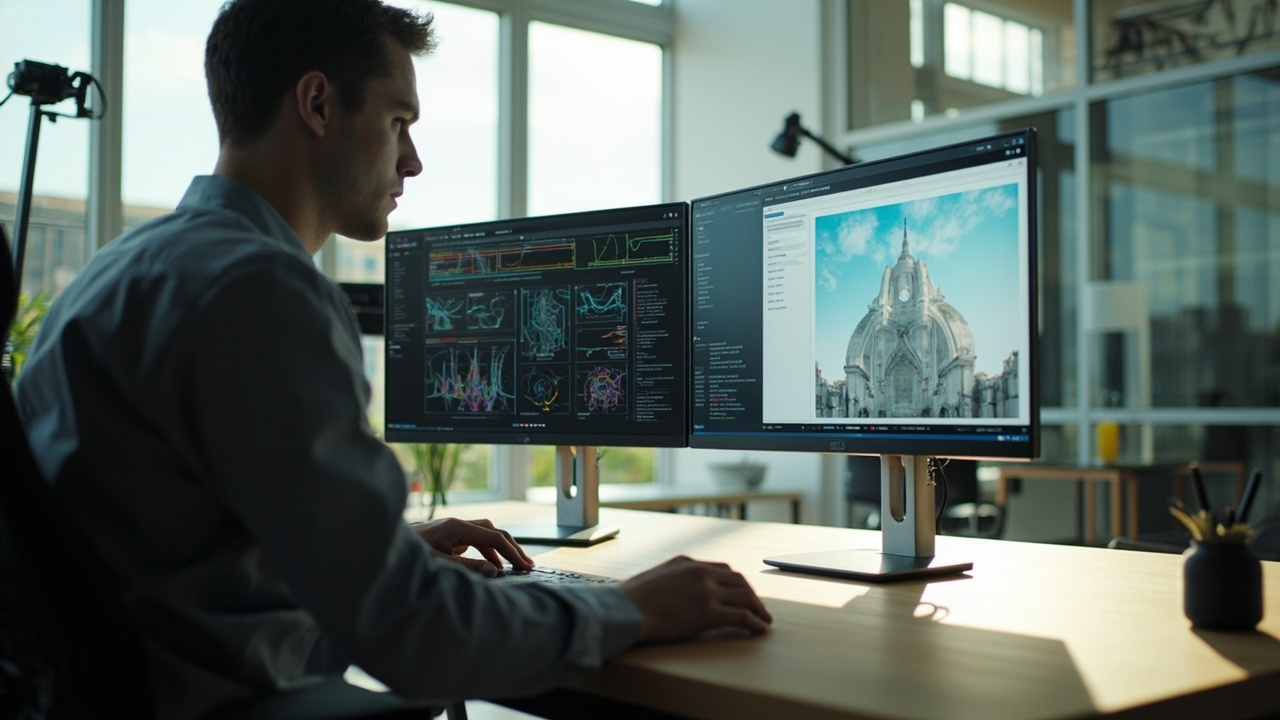
 A category scene revisits AI Visibility Scan — glowing visibility score, business diagnosis, recommendation panel.Explainer image for AI Visibility Scan. This scene highlights glowing visibility score, business dia…
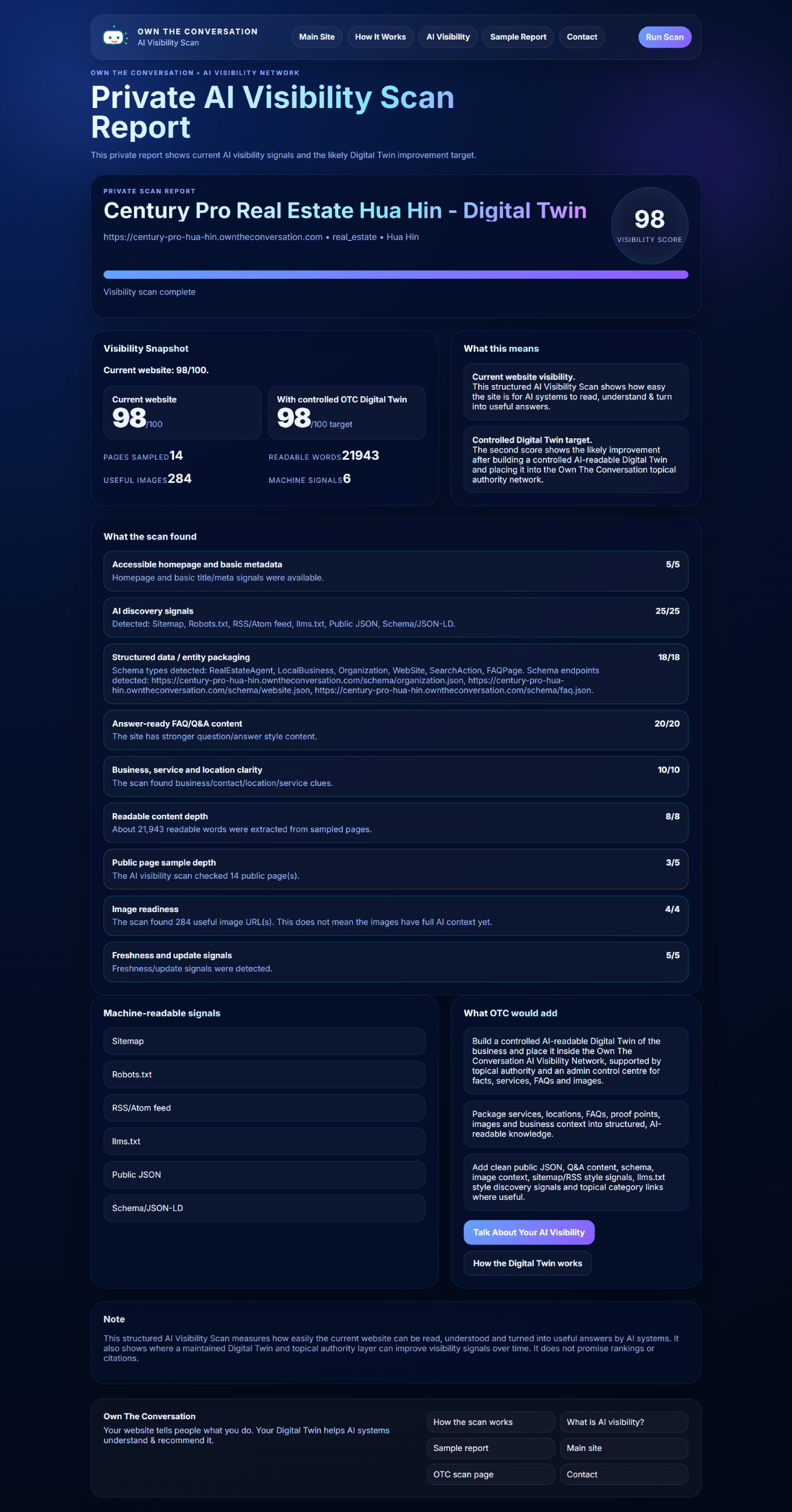 digital report screenOwn The Conversation support image for AI Visibility Scan. AI visibility scan report showing website…